You do not always need months of study or a large budget to learn a useful new skill.
There are many free online short courses that can be completed in a few hours, making them useful for job seekers, students, entrepreneurs and anyone looking to improve their CV.
For young South Africans balancing job hunting, studies, side hustles or family responsibilities, short online courses can be a practical way to develop new skills without committing to a lengthy programme.
Some courses can be completed in a single afternoon, while others may take several hours or a few days depending on the learner’s pace.
Below are platforms where you can find free or free-to-study short courses in areas such as digital marketing, customer service, Microsoft skills, business, technology and personal development.
Why Free Short Courses Matter for Job Seekers
Adding relevant learning to your CV can demonstrate that you are actively developing your skills.
1. Fill Gaps on Your CV
If you have limited work experience or have been unemployed, completing a relevant course can show that you have continued learning and developing your skills.
For example, an applicant applying for an administrative position could complete training in Microsoft Excel, communication or office productivity.
2. Give You Interview Talking Points
Short courses can also give you something practical to discuss during an interview.
Instead of simply saying that you are interested in digital marketing, for example, you can explain what you have learned and how you have applied those skills.
3. Develop Job-Relevant Skills
Courses in areas such as Excel, customer service, digital marketing, communication and data analysis can help you develop skills that are useful across different types of jobs.
However, a short course should be viewed as additional skills development, not a replacement for qualifications or work experience where these are required.
Where to Find Free Short Courses Under 10 Hours
1. Google Skillshop – Digital and Google Product Skills
Google Skillshop provides online training developed around Google products and tools.
The platform includes training covering areas such as:
- Google Ads
- Google Analytics
- Google Marketing Platform
- Google Business Profile
- Google Ad Manager
- Google AdMob
Skillshop allows learners to study at their own pace, and some Google product areas offer certifications.
This can be useful for people interested in:
- Digital marketing
- Advertising
- Social media
- E-commerce
- Analytics
- Online business
2. Alison – Short Certificate Courses
Alison offers thousands of online courses that can be studied for free.
Its certificate courses are generally designed around individual topics and can often be completed in a few hours. Alison states that its certificate courses average around two to three hours, while diploma courses average around eight to 10 hours.
Popular areas include:
- Customer service
- Microsoft Office
- Computer skills
- Health and safety
- Business
- Project management
- Retail
- Marketing
One important point is that studying and completing Alison courses is free, but the official branded digital or printed certificate may require payment. Learners can instead access a free Learner Record showing completed courses and results.
3. HubSpot Academy – Marketing, Sales and Customer Service
HubSpot Academy is another useful option for people interested in digital marketing, sales, customer service and business.
The platform describes its training as free and online, and its current catalogue includes certifications that can be completed in several hours. Examples include:
- Social Media Marketing – around 5 hours
- Digital Marketing – around 3 hours
- Content Marketing – around 8 hours
- Inbound – around 3 hours
- Digital Advertising – around 4 hours
- Service Hub Software – around 2 hours
HubSpot says learners can earn certifications and add recognised badges to their LinkedIn profiles.
This makes the platform particularly relevant to people interested in:
- Digital marketing
- Social media management
- Content creation
- Sales
- Customer service
- Communications
4. Microsoft Learn – Technology and Productivity Skills
Microsoft Learn offers self-paced training through interactive modules and learning paths.
The platform covers Microsoft technologies and a wide range of technical and workplace skills. Individual modules can be completed in relatively short sessions, with Microsoft stating that learners can develop skills through modules and paths even when they have only 15 minutes or an hour available.
Topics vary across the platform and can include areas such as:
- Microsoft 365
- Data
- Cloud computing
- AI
- Azure
- Power Platform
- Business applications
For job seekers interested in office, technology or data-related careers, Microsoft Learn can be a useful place to develop practical knowledge.
5. OpenLearn – Free Courses From The Open University
OpenLearn is the free learning platform of The Open University in the United Kingdom.
There are nearly 1,000 free courses covering a wide range of subjects. OpenLearn says that every course provides a Statement of Participation, while some courses also offer free digital badges.
Topics include areas such as:
- Communication
- Business
- Personal finance
- Study skills
- Bookkeeping
- Academic skills
- Technology
- Personal development
The Statement of Participation is evidence that you completed the course, although OpenLearn notes that it does not carry formal academic credit towards a qualification.
6. Coursera – Free Learning and Short Guided Projects
Coursera has a large catalogue of online courses and short learning experiences.
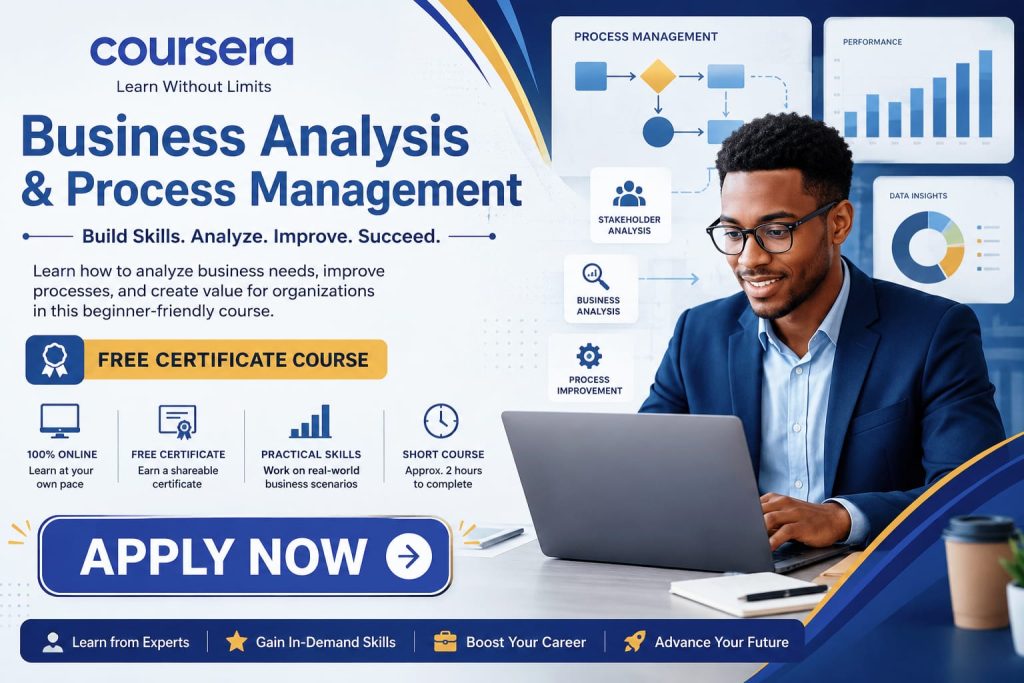
Its current catalogue includes free courses and Guided Projects, with some Guided Projects taking less than two hours. Coursera currently lists free Guided Projects covering areas such as business analysis, Google Analytics, Excel, Python, WordPress and interview preparation.
However, free access varies by course. Coursera states that some courses offer free audit options, while certificates and certain features may require payment.
So, always check the individual course page before enrolling if your goal is specifically to obtain a free certificate.
How to Choose the Right Free Short Course
With thousands of courses available online, it is easy to collect certificates without developing skills that are relevant to your career.
- Use these steps to choose wisely.
- Match the Course to Jobs You Want
- Search for five or more job advertisements for positions you would like to apply for.
- Look for skills that appear repeatedly.
For example, if many administrative vacancies mention:
- Microsoft Excel
- Microsoft Word
- Communication
- Data capturing
then choose courses that help you develop those skills.
Choose Recognised Platforms
Consider learning from established platforms and organisations such as:
- Google Skillshop
- Microsoft Learn
- HubSpot Academy
- The Open University/OpenLearn
- Alison
- Coursera
The value of a course depends on its content, relevance and your ability to demonstrate the skill – not simply the name on the certificate.
Finish What You Start
One completed, relevant course is generally more useful than several courses that you started but never finished.
If a course takes five hours, you could potentially complete it over a weekend or by studying for about an hour a day.
Apply What You Learn
Try to use your new skill immediately.
For example:
- Create an Excel spreadsheet.
- Build a simple marketing plan.
- Design a social media campaign.
- Create a sample business budget.
- Practise writing professional emails.
- Build a basic WordPress website.
- Practical application can help you explain your skills more confidently during job applications and interviews.
How to Add Short Courses to Your CV
Create a section on your CV called Certifications, Short Courses or Additional Training.
Include:
Course Name – Platform – Completion Date
For example:
Social Media Marketing Certification – HubSpot Academy – 2027
Only list courses you have actually completed.
If a platform provides a certificate or shareable achievement link, include it where appropriate.
Add Your Certificates to LinkedIn
You can also add relevant completed courses and certifications to your LinkedIn profile.
Where the platform provides a verification link, use the official link rather than uploading misleading or unverifiable information.
HubSpot, for example, provides certification badges that can be shared on LinkedIn.
Do Free Short Courses Guarantee a Job?
No.
A short course can strengthen your skills and application, but a certificate by itself does not guarantee employment.
Your chances of being considered for a position will also depend on factors such as:
- Your qualifications
- Relevant experience
- Technical skills
- Communication ability
- The requirements of the vacancy
- The quality of your CV
- Your interview performance
- The employer’s selection process
Use short courses as one part of your overall career-development strategy.
Frequently Asked Questions
Are free short courses worth adding to my CV?
They can be useful when they are relevant to the jobs you are applying for. A short course demonstrates additional learning, but employers may still require specific qualifications or experience.
Do all free courses provide free certificates?
No. Certificate policies differ between platforms.
For example, OpenLearn provides free Statements of Participation, while Alison allows free study and provides a free Learner Record, but its official branded certificate may be purchased separately.
Coursera also has different free-access options, so check the individual course before enrolling.
Can I complete these courses on my phone?
Many online courses can be accessed through a mobile browser, although the experience varies by platform and course.
Some practical learning environments may require a computer. For example, Coursera notes that its Guided Projects use a cloud desktop workspace and are not available on mobile devices.
How many short courses should I complete?
Focus on quality and relevance rather than quantity.
Two or three completed courses that match the jobs you want can be more useful than collecting numerous unrelated certificates.
Will these courses help me get a job in South Africa?
They can help you develop additional skills and strengthen your CV, but they do not guarantee employment.